



MANUFACTURING
Why Regrinding Should Be Part of Your Cutting Tool Strategy
Jun
Why Regrinding Should Be Part of Your Cutting Tool Strategy
If you are throwing away every carbide cutting tool as soon as the edge wears, there is a good chance you are leaving money on the table.
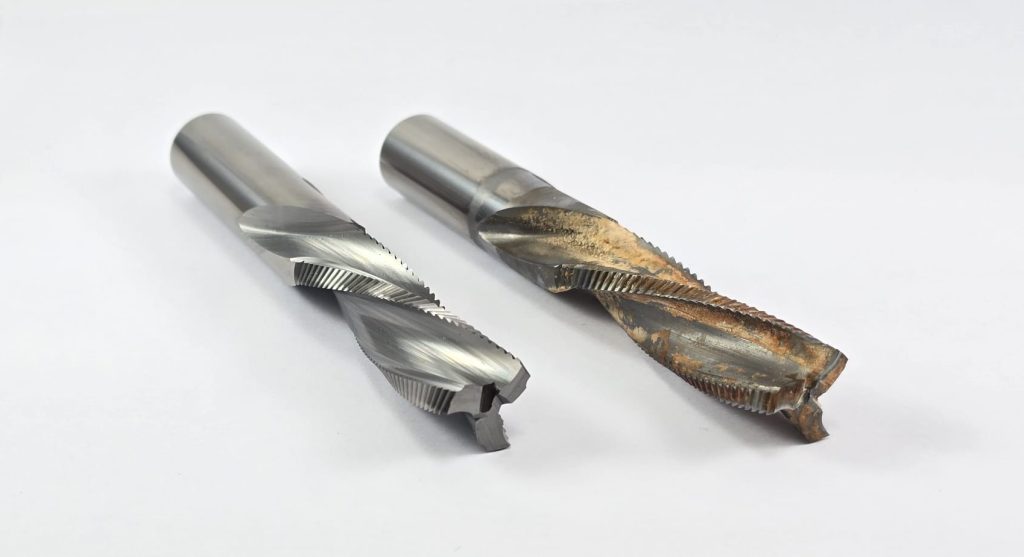
Carbide tools are not cheap, and with raw material costs continuing to rise, manufacturers need to think more carefully about how they get value from every tool they buy. In many cases, a worn carbide tool does not need to be replaced straight away. If the tool is still structurally sound and has enough material left, a proper regrind can restore cutting performance and put that tool back into production.
Regrinding is not just about saving money. It is about reducing waste, improving cost per part, keeping proven tooling in use, and building a smarter tooling strategy around the work you actually do.
At Carbide Tools Ltd, we manufacture, modify and regrind tungsten carbide cutting tools for businesses across New Zealand. We see both sides of the equation every day. Sometimes a new tool is the right answer. Sometimes a custom tool is needed. But in many cases, a carbide tool regrind is the most practical and cost effective move.
What Is Carbide Tool Regrinding?
Carbide tool regrinding is the process of restoring the worn cutting edges of a carbide tool by carefully grinding away damaged or worn material and rebuilding the cutting geometry where possible.
That may sound simple, but a proper regrind is not just “sharpening the end”. The cutting edge, relief angles, flute geometry, end geometry and application all need to be considered. A carbide tool is only useful if it cuts the way it is supposed to cut.
A poor regrind can create more problems than it solves. It can change the tool diameter too much, weaken the edge, alter the cutting action, reduce chip evacuation or make the tool unsuitable for the original job. A good regrind should be controlled, repeatable and based on the tool’s actual use.
The goal is simple: restore useful cutting performance without pretending every worn tool is worth saving.
Why Regrinding Matters More Than Ever
The question should not be:
“Is this tool worn?”
The better question is:
“Is there still value left in this tool?”
If the answer is yes, regrinding can help recover that value. This is especially true for premium carbide tools, custom tools, larger diameter tools, form tools and tools that are already proven in a production process.
Tooling costs are under more pressure than they were a few years ago. Tungsten carbide is expensive to produce, and carbide rod pricing has increased significantly across the industry. That affects every manufacturer using solid carbide drills, end mills, routers, reamers, form tools and custom cutters.
When tools were cheaper, some businesses treated carbide as more disposable. That mindset is becoming harder to justify.
The Real Cost of Replacing Tools Too Early
The price of a replacement tool is only one part of the cost.
When a tool is replaced too early, you are not just paying for another cutter. You may also be losing value from the carbide you already paid for. If that tool still had usable material left, throwing it away is wasteful.
There are also practical costs.
You may need to wait for a new tool to arrive. You may need to revalidate the process. The replacement tool may not perform exactly the same way. If the original tool was a custom cutter, replacing it may involve design time, manufacturing time and higher cost than a standard catalogue tool.
This matters even more for New Zealand manufacturers. Many local businesses are not running massive production volumes with endless spare tooling on the shelf. They are often working on smaller batches, urgent work, specialist materials and repeat jobs where reliability matters.
In that environment, regrinding is not just a cost saving exercise. It is a way to keep useful tooling in circulation.
What a Proper Carbide Regrind Actually Restores
A worn cutting tool usually fails in one or more of the following ways.
- The cutting edge becomes dull
- The relief wears and the tool starts rubbing
- The finish becomes poor
- Cutting forces increase
- Heat builds up
- The tool starts chattering
- The edge chips
- The tool no longer holds size
A proper regrind aims to remove the worn material and restore the cutting edge so the tool can cut again instead of rub.
Depending on the tool and the application, this may involve restoring the end geometry, touching up flutes, correcting relief, improving edge condition or modifying the tool slightly based on how it has worn.
That last point is important. Tool wear gives clues. If a tool is wearing badly in one area, chipping at the corners, building up material on the edge or failing earlier than expected, the issue may not just be age. It may point to a geometry issue, a feed and speed issue, a machine setup issue, a coolant issue or a material mismatch.
A good regrinding discussion should look at the tool and the job, not the tool in isolation.
Which Carbide Tools Are Worth Regrinding?
The best candidates are usually tools that still have enough usable carbide remaining and have not suffered major structural damage.
Not every tool is worth regrinding. That is the honest answer, so understanding why is key to your tooling system.
Good candidates can include:
- Solid carbide end mills
- Carbide drills
- Reamers
- Router tools
- Form tools
- Profile cutters
- Custom carbide tools
- Larger diameter tools
- Tools used in repeat production
- Tools that were expensive to replace
- Tools with predictable wear
- Tools that have not been pushed to the point of failure
Custom tools are often especially good candidates because the original cost is usually higher than a standard tool. If the tool was designed for a specific operation and it has been working well, regrinding can be a smart way to keep that proven solution running.
A regrind is also worth considering when the tool has predictable wear but has not been pushed to the point of failure. Tools that come in at the right time are usually easier to recover than tools that have been run until they are heavily chipped, burnt or broken.
When a Carbide Tool Is Not Worth Regrinding
This is where a supplier needs to be honest.
A tool may not be worth regrinding if:
Sometimes the right answer is replacement. Sometimes the right answer is a new custom tool. Sometimes the job itself needs a different tool design altogether.
Regrinding should not be treated as a magic fix. It is a practical option when the tool condition, value and application line up.
Regrinding at the Right Time
One of the biggest mistakes is waiting too long.
A carbide tool that is lightly worn may be easy to recover. A tool that has been pushed until it is chipped, overheated or breaking down may be much harder to save.
The right time to regrind is usually before the tool completely fails.
Warning signs include:
- Finish quality starting to drop
- Burrs increasing
- Size starting to drift
- The tool needing more pressure or power to cut
- Heat increasing
- Chatter appearing
- Edges showing visible wear
- Tool life becoming inconsistent
- The tool has been performing well and then starts to change
- Waiting until it breaks usually costs more
If a tool has been performing well and then starts to change, that is often the point where it should be assessed. Waiting until it breaks usually costs more.
A broken tool is not just a worn tool. It may also mean scrapped parts, damaged holders, damaged workpieces, interrupted production and lost time.
Does Regrinding Change Tool Size?
Yes, it can.
Any time material is removed from a cutting tool, the size or geometry can change. That does not automatically make the tool unusable, but it does need to be understood.
For some tools, a small change in diameter does not matter. For others, especially reamers (front end reground only), form tools and tight tolerance cutters, size is critical.
This is why regrinding should be assessed based on the application. A tool used for roughing may tolerate more change than a tool used for finishing. A custom profile tool may need much tighter control than a general purpose end mill.
The key is not pretending nothing changes. The key is understanding whether the change still works for the job.
Regrinding Standard Tools vs Custom Tools
Standard carbide tools can often be reground successfully, especially if they are quality tools and still have usable material remaining.
Custom carbide tools can be even more valuable to regrind because they are usually made for a specific purpose. If a custom tool combines operations, cuts a special form, solves a production problem or reduces cycle time, keeping that tool in service can be much more valuable than replacing it every time it wears.
For example, a custom form tool may have been designed around a specific customer part. If it works well, regrinding helps preserve a proven production method.
That is why regrinding and custom tooling should not be seen as separate services. They work together. A good custom tool should be designed with performance in mind, but also with future serviceability in mind where possible.
Regrinding and Cost Per Part
The real measure of tooling value is not the purchase price of the cutter.
The better measure is cost per part.
A cheap tool that wears quickly, breaks early or produces inconsistent results can become expensive very quickly. A premium tool that lasts longer and can be reground may deliver better value over its full life.
Regrinding helps because it spreads the original tool cost over more usable life.
For example, if a carbide tool can be used, reground and used again, the value of that original tool improves. If it can be reground multiple times while still performing properly, the cost per part can reduce further.
This does not mean every tool should be reground. It means tooling decisions should be based on total value, not just replacement price.
The Role of Geometry in Regrinding
Tool geometry is one of the biggest reasons regrinding needs to be done properly.
A carbide tool does not perform well just because it is made from carbide. It performs well because the carbide grade, geometry, edge condition and application are matched.
Important geometry factors include:
If these are wrong, the tool may rub, chatter, chip, create heat or leave a poor finish.
A proper regrind should respect the original function of the tool. In some cases, it can also improve the tool if the wear pattern shows that the original geometry was not ideal for the job.
This is where experience matters. Regrinding is not just removing carbide until the edge looks sharp again. It is restoring a cutting tool so it can go back into a real machining process.
Regrinding and Machine Setup
Even the best regrind will struggle if the machine setup is working against it.
Poor tool holding, excessive runout, vibration, bad fixturing, incorrect feeds and speeds, poor coolant delivery or unstable workholding can all shorten tool life. If those issues are not corrected, the reground tool may wear out just as quickly as the original tool did.
This is why tool life should be viewed as a system.
If a customer is repeatedly sending in tools with the same failure pattern, the best answer may not be to keep regrinding the same problem. The better answer may be to review the application and work out why the tools are wearing that way in the first place.
Regrinding for Different Materials
Different materials wear tools in different ways.
This matters because a regrind should not ignore what the tool is cutting.
A tool used in aluminium may need a different edge condition from a tool used in stainless. A router tool used in timber or composite board will need a different approach from a endmill used in metal. A reamer used for tight tolerance work needs a different level of control from a roughing cutter.
The more specific the application, the more important the regrind assessment becomes.
Local Regrinding in New Zealand
For New Zealand manufacturers, local regrinding has practical advantages.
You can talk directly to the people assessing the tool. You can send photos before sending the tools in. You can explain the issue, the material, the machine and the result you need. If the tool is not worth regrinding, you can be told before wasting time and money.
Local turnaround also matters. When a job is stopped because tooling is worn or unavailable, waiting for offshore replacement tools can be expensive. Local regrinding gives businesses another option, especially when the tools are already proven in the application.
This is not about saying every tool must be made or reground locally. Imported tooling has its place. But when the job is urgent, unusual or high value, local support from a New Zealand carbide cutting tool manufacturer can make a real difference.
Regrinding and Waste Reduction
There is also a waste argument.
Tungsten carbide is a valuable material. Throwing away tools too early wastes material, money and manufacturing effort. Regrinding helps extend the useful life of existing carbide before it eventually becomes scrap.
That does not remove the need for recycling. Worn carbide should still be treated as valuable scrap when it can no longer be used. But before a tool reaches that point, it is worth asking whether it still has another life left in production.
A smarter tooling strategy uses the full value of the tool before discarding it.
How Our Carbide Tool Regrinding Process Works
At Carbide Tools Ltd, the process is straightforward.
- Send photos of the worn tools
- Include tool type, size and quantity
- Tell us the material being cut and any issues you are seeing
- We look at tool condition and carbide remaining
- We check damage, geometry and application
- If regrinding does not make sense, we will tell you
- Tools are cleaned, inspected and reground on our CNC grinding machines
- Where possible, we restore the cutting edges and prepare the tool for continued use
- The tool is checked before being returned
- The goal is to return it ready to go back into production where suitable
The important part is the assessment. Regrinding should create real value. If it does not, replacement or custom tooling may be the better option.
Not Sure If Your Tools Are Worth Regrinding?
If you have worn carbide tools sitting on a bench or in a drawer, do not assume they are scrap. Send through a photo, the approximate quantity, tool type, diameter and what material the tools have been cutting.
We can assess whether regrinding is likely to be worthwhile before you send anything in. Get in touch with our team or learn more about our carbide tool regrinding service.
Choosing a Smarter Tooling Strategy
Regrinding should not be an afterthought. It should be part of how manufacturers think about tooling value.
The best approach is simple.
That approach gives you a better chance of reducing cost per part, improving consistency and getting more value from every carbide tool you buy.
In a market where tooling costs continue to rise, manufacturers cannot afford to treat good carbide tools as disposable too early. A worn tool is not always a dead tool. Sometimes it is a tool with another production life left in it.
Frequently Asked Questions About Carbide Tool Regrinding
Common questions about carbide tool regrinding, custom tooling, and regrinding services in New Zealand.
Can carbide tools be reground more than once?
Yes, many carbide tools can be reground more than once, depending on the tool type, geometry, amount of wear and how much carbide remains. Tools that are reconditioned before heavy damage usually have a better chance of being reground multiple times.
Is a reground carbide tool as good as a new tool?
It depends on the tool, the application and the quality of the regrind. In many cases, a properly reground tool can return to useful production work. However, it may not always be identical to a new tool, especially if size or geometry has changed.
When should I send tools in for regrinding?
The best time is usually when performance starts to drop but before the tool fails. Poor finish, heat, chatter, burrs, visible wear or inconsistent sizing can all be signs that the tool should be assessed.
Is every carbide tool worth regrinding?
No. Some tools are too damaged, too small, too worn or too low value to justify regrinding. Each tool should be assessed based on condition, value and application.
Does regrinding reduce tool diameter?
It can. Material must be removed to restore the cutting edge, so the tool size may change. Whether that matters depends on the tool and the application.
Can custom carbide tools be reground?
Yes, many custom carbide tools can be reground if there is enough usable carbide remaining and the geometry can be restored. Custom tools are often strong candidates because they are usually higher value and made for a specific job.
Can regrinding improve tool performance?
In some cases, yes. If the tool has been wearing in a way that points to a geometry issue, there may be an opportunity to adjust the tool during regrinding. This depends on the tool, the material and the application.
Should I send photos before sending tools in?
Yes, photos are usually the easiest starting point. A few clear photos, the tool size, quantity, material being cut and the issue you are seeing are usually enough to begin assessing whether regrinding looks worthwhile.
Sources and Industry References
- Sandvik Coromant – Wear on cutting edges
- Kyocera SGS Precision Tools – Maximizing Tool Life
- Ceratizit – Regrinding of cutting tools
- Industry supplier data and carbide tooling observations
- Carbide Tools Ltd – Carbide Tool Regrinding Service NZ
- Carbide Tools Ltd – How to Choose the Right Carbide Cutting Tool