



MANUFACTURING
Why Tungsten Carbide Prices Are Rising and What It Means
Mar
An inside look at the global pressures affecting tungsten carbide cutting tool supply.
Over the past 12 months, manufacturers around the world have noticed something concerning and many companies are wondering why tungsten carbide cutting tools prices are rising so quickly and whether the increases will continue. Tungsten carbide cutting tools are becoming increasingly more expensive and lead times from overseas cutting tool manufacturers are growing longer than usual, but the real story behind these rising costs is happening much earlier in the supply chain.
How Tungsten Carbide Is Made and Why Costs Are Increasing
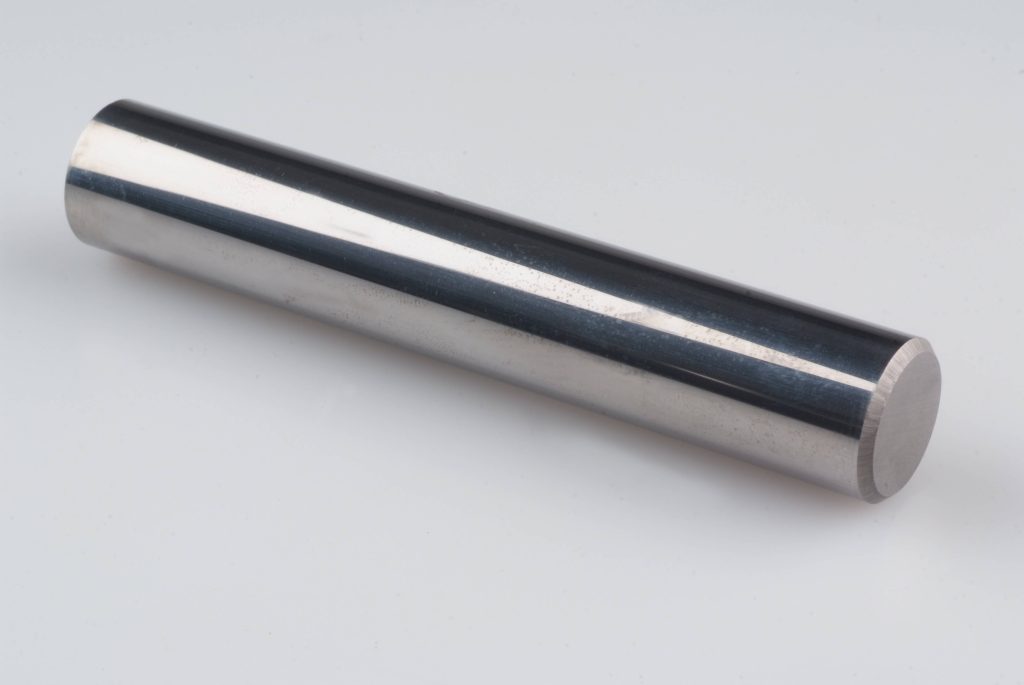
Most people who use carbide cutting tools know that they are made from tungsten carbide, but fewer people know what actually goes into producing the solid tungsten carbide rods that their tools are manufactured from.
The process starts by combining extremely fine tungsten carbide particles with a small amount of cobalt binder, which acts like a glue to hold the hard carbide grains together. This powder mixture is precisely blended and then pressed or extruded into soft and fragile rod shapes. The rods are then heated in a furnace to around 1400-1500°C in an extremely energy-intensive process called sintering. The cobalt binder melts and pulls the carbide particles tightly together to form a dense and extremely hard material. The result is the solid tungsten carbide rods that tool manufacturers precision-grind with diamond grinding wheels to form the cutting tools that you may use.
The final rod that is produced depends on factors like carbide grain size, cobalt content and the quality of the sintering process, which is why carbide cutting tools made from different sources can perform very differently depending on where they were made.
Why Tungsten Carbide Tools Are Essential and Cost More
If you have experience cutting just about any material, you know that the cutter creates extreme heat and pressure which results in wearing the tool that is doing the cutting. It is all these factors that contribute to why tungsten carbide has become the standard for high-performance cutting tools across modern manufacturing where efficiency and precision are critical. It is much harder than steel and allows faster cuts, maintains a sharp edge even at the high temperatures that are caused by machining tough materials. It also lasts longer before needing to be reground or replaced.
Why Tungsten Carbide Prices Are Rising
The price of tungsten carbide has risen sharply in recent years due to a combination of factors. Supply concentration, declining ore grades, geopolitical controls, and rising production costs all play a role, alongside the rapidly increasing global demand.
Supply Concentration and Global Control
The raw material and production processes are heavily geographically concentrated, with 52% of known global tungsten reserves and around 78-83% of the world’s tungsten mining being done in China. It is estimated that roughly 85-90% of tungsten carbide refining and chemical processing is also controlled by China. Due to tightened export regulations on tungsten products, exports have reportedly reduced by around 40% year-on-year in some periods. In practice, this means that the global supply of tungsten is controlled by a very small number of players.
This level of concentration has real consequences. In recent years, these supply constraints have contributed to the major raw material price increases across the tungsten supply chain. In some cases, tungsten concentrate prices have increased over 200% year-on-year, depending on the grade and market timing. Another big factor is the roughly 220% increase in the price of APT (Ammonium paratungstate) over the past few years. It is the key chemical used to produce tungsten powder and it has risen from about $335USD/MTU (“MTU”=price per metric tonne unit) to over $1100USD/MTU. These increases directly raise the cost of producing carbide powder and rods right from the start.
Rising Demand Across Key Industries
Alongside the supply constraints, demand for tungsten carbide is growing rapidly across key modern industries such as aerospace, automotive, electronics & semiconductors, oil & gas drilling, and defence & military equipment. As these sectors continue to expand, the demand for tungsten continues to increase faster than the supply can keep up with.
Tungsten carbide tools depend entirely on this global supply chain, so tool prices inevitably follow tungsten prices upward. From a tooling perspective, these changes have been felt directly in rising raw material costs and lead times for some time. We are now at a point where those increases can no longer be absorbed.
What This Means For Manufacturers
Rising costs and supply constraints are changing the day-to-day reality for tool manufacturers across the globe. Margins are getting squeezed beyond what is feasible. Businesses can’t absorb the increases; we are at a point in time where pricing decisions are now being forced and not chosen.
Lead times and supply instability are also having a major impact. It is not always possible to plan what tooling is needed months in advance, and inconsistent carbide rod supply is leading to longer and less predictable delivery times. Planning has become much more difficult when jobs need to be turned around in a week or two.
We are seeing a shift in the way manufacturers are conducting themselves. Aside from corrective pricing changes to meet the cost of essential materials, companies are becoming more selective with the jobs they are taking on and focussing on higher value work to reduce waste and improve efficiency where possible. There has been a clear shift in focus on tool life and performance.
Extending tool life and performance is becoming more important as the cost per cut matters more than the upfront cost of a tool. Businesses are realising that tailoring their tools to best suit their applications and regrinding them when they are worn is no longer optional in an efficient modern workshop. It has now become a strategic decision to reduce the number of tools needed, and to extend the life of their advanced cutting tools to reduce waste and downtime.
Reduce your tooling costs without compromising performance
If rising carbide prices are impacting your operation, the focus needs to shift from upfront cost to overall performance and tool life. In many cases, optimising tooling or regrinding existing tools can significantly reduce your cost per part without sacrificing quality.
Get in touch with our team to discuss your application or send us a tool to assess for regrinding.
The Role of Local Manufacturing
In this environment, local manufacturing is becoming increasingly important because it allows companies to have greater control over their production and respond faster to more reliable lead times. With less dependency on overseas supply, local manufacturers can produce more predictable performance and maintain tighter control over their production processes.
Local manufacturers are challenging the idea that ‘cheaper’ upfront costs of imported products result in less overall money being spent on a job. However, the upfront cost of a consumable product rarely reflects the true cost of delays, tool failure, and inconsistent performance.
Looking Ahead
As much as we would like a clear-cut answer as to whether this is the new normal or just a temporary struggle, we can only plan based on facts. The facts are that the supply constraints are structural, demand is not slowing, and volatility is the only constant in the current market. This is not an issue that has any short-term solutions, no matter how you look at it. Price increases across associated industries will continue. The only question is how much they can absorb and when the increases will occur.
Prices may stabilise in the future but based on history they are extremely unlikely to return to previous levels. The only way for businesses to adapt to this volatility is a shift in mindset from an upfront price focus to a more rounded overall value focus. Smart tooling decisions matter more now than ever. A combination of tool life, reliability and therefore reducing the overall cost will be the smartest focus for modern manufacturers trying to adjust to the changes upstream.
About the Author
This article was written by Carbide Tools Ltd, New Zealand’s only dedicated custom tungsten carbide cutting tool manufacturer. With decades of combined experience in carbide tooling, manufacturing, and regrinding, the team works directly with real-world machining applications every day.
Frequently Asked Questions About Carbide Prices
Why are tungsten carbide prices rising?
Tungsten carbide prices are rising due to supply concentration in China, export restrictions, rising APT prices, increasing energy costs, and growing global demand across multiple industries.
What is APT and why does it affect carbide prices?
APT (Ammonium Paratungstate) is the key chemical used to produce tungsten powder. Increases in APT prices directly increase the cost of producing tungsten carbide.
Will tungsten carbide prices go down?
While prices may stabilise, structural supply constraints and continued demand growth make it unlikely that prices will return to previous levels.
How can manufacturers reduce carbide tooling costs?
Manufacturers can reduce costs by focusing on tool life, regrinding, and optimising tooling performance rather than choosing tools based solely on upfront price.
Sources and Industry References
- US Geological Survey (USGS) – Tungsten Market Data
- International Tungsten Industry Association (ITIA)
- Fastmarkets – APT Pricing Reports
- Asian Metal – Tungsten Price Index
- Industry supplier data and market observations